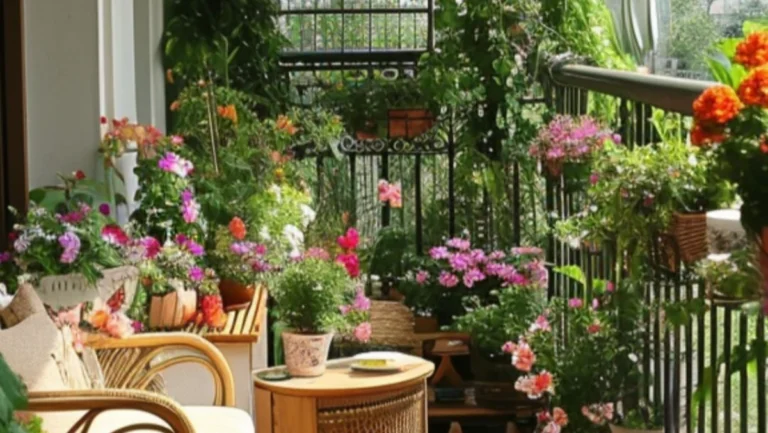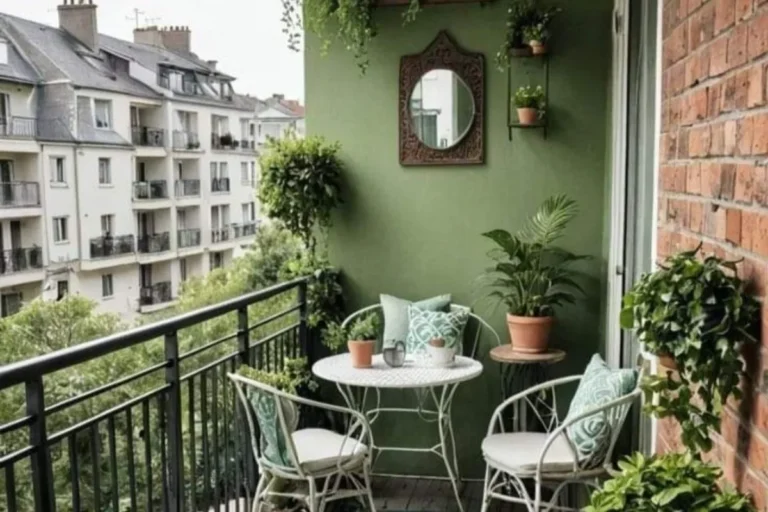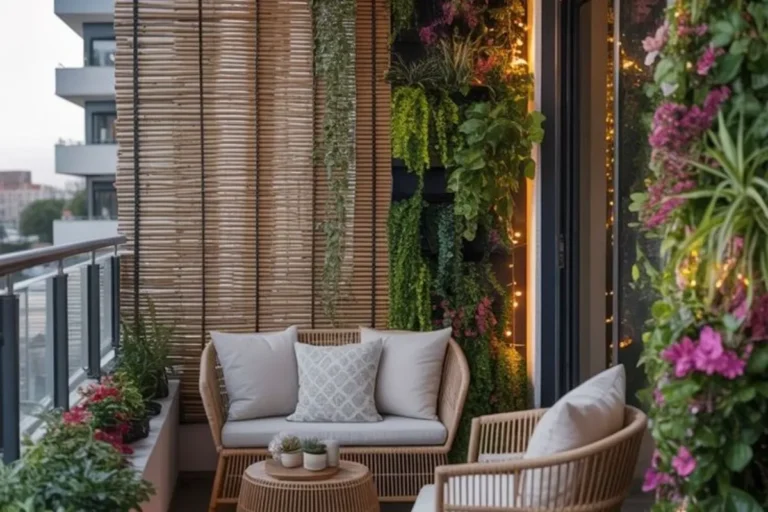
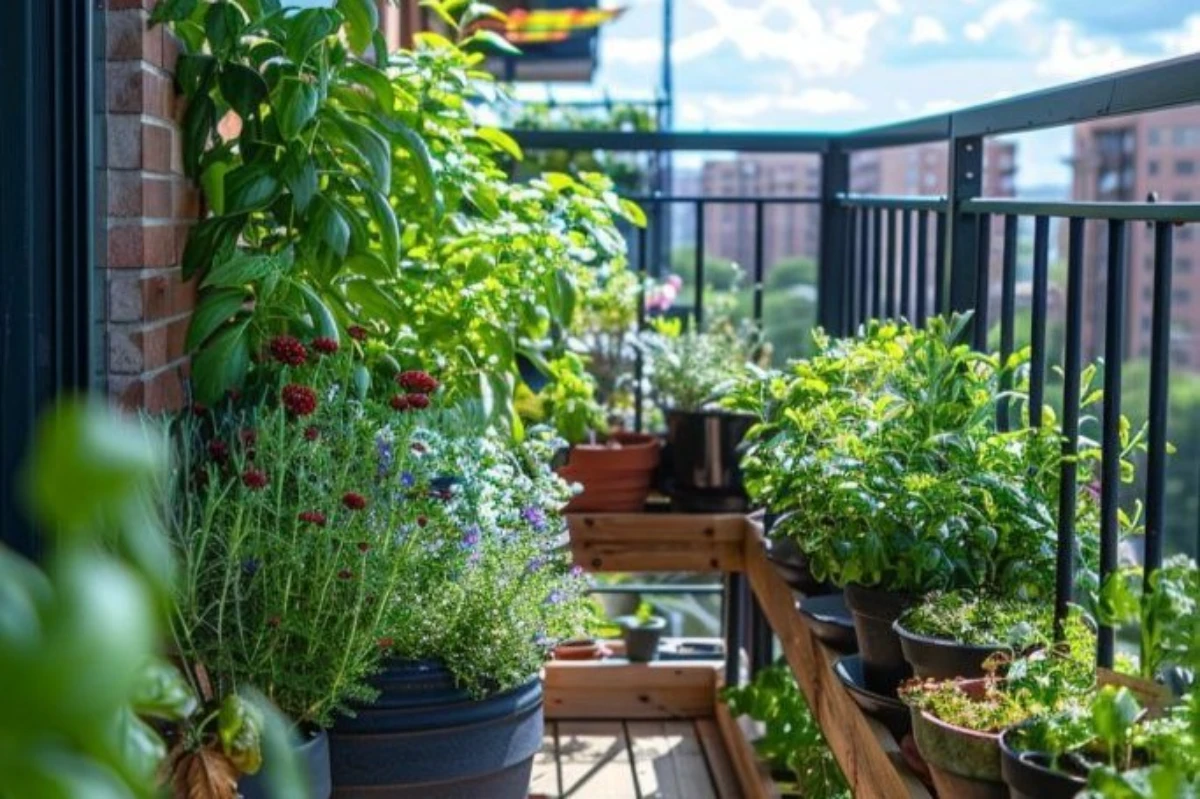
Starting a balcony garden is one of the easiest ways to bring greenery into your home, even if you live in an apartment or condo. You don’t need a big yard or advanced gardening skills—just a little planning and the right setup. With containers, sunlight, and a few easy plants, your balcony can become a relaxing and productive green space.
This guide walks you through how to start a balcony garden for beginners, step by step, so you can grow with confidence from day one.
Before You Start a Balcony Garden
1. Check Your Balcony Conditions
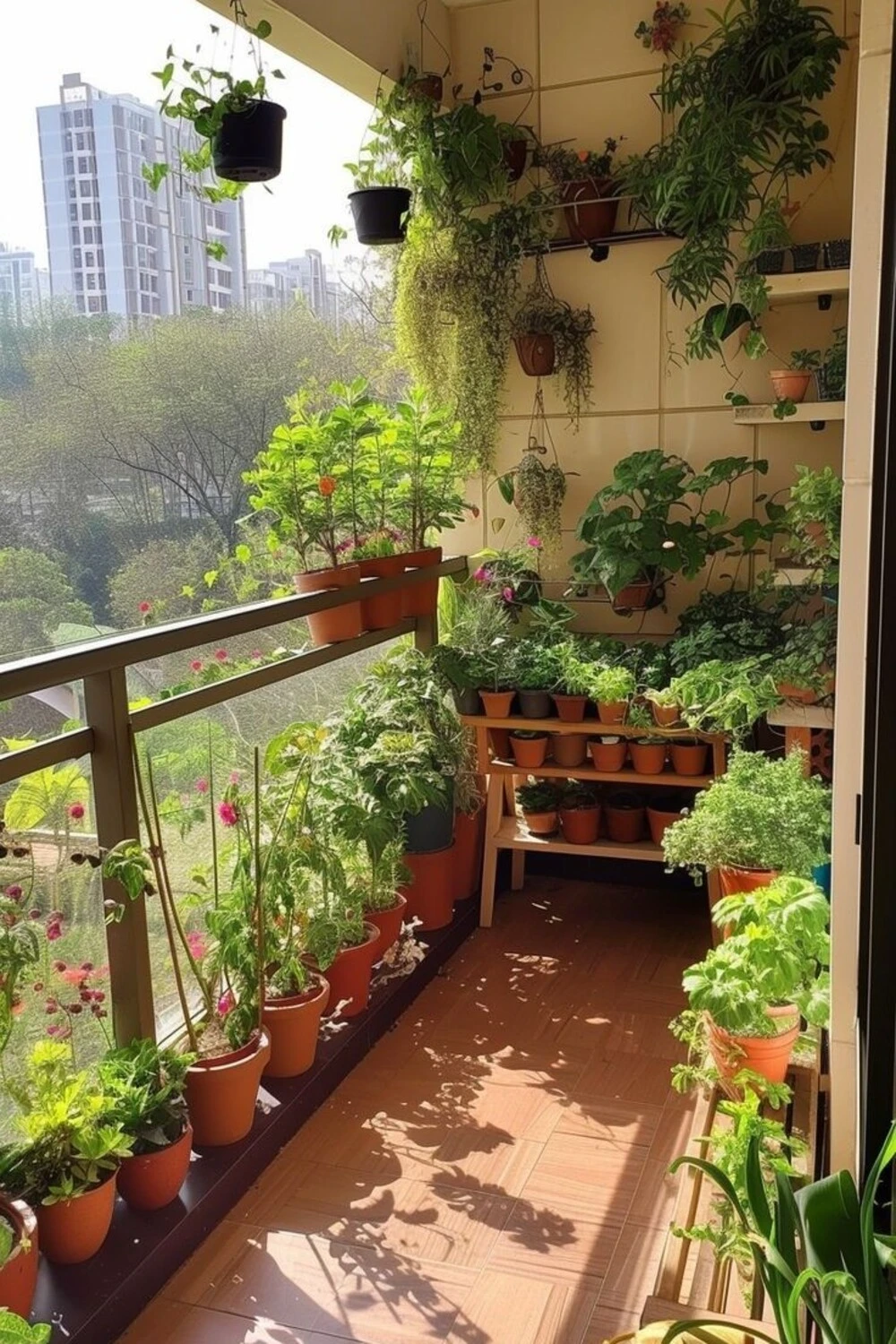
Before buying plants, take a close look at your balcony. Notice how many hours of sunlight it gets each day. South- and west-facing balconies usually receive the most sun, while north-facing ones are shadier.
Also consider wind exposure and weather. Higher floors tend to be windier, which can dry out plants faster. Make sure your balcony can safely support planters and avoid overcrowding heavy containers.
2. Decide What You Want to Grow
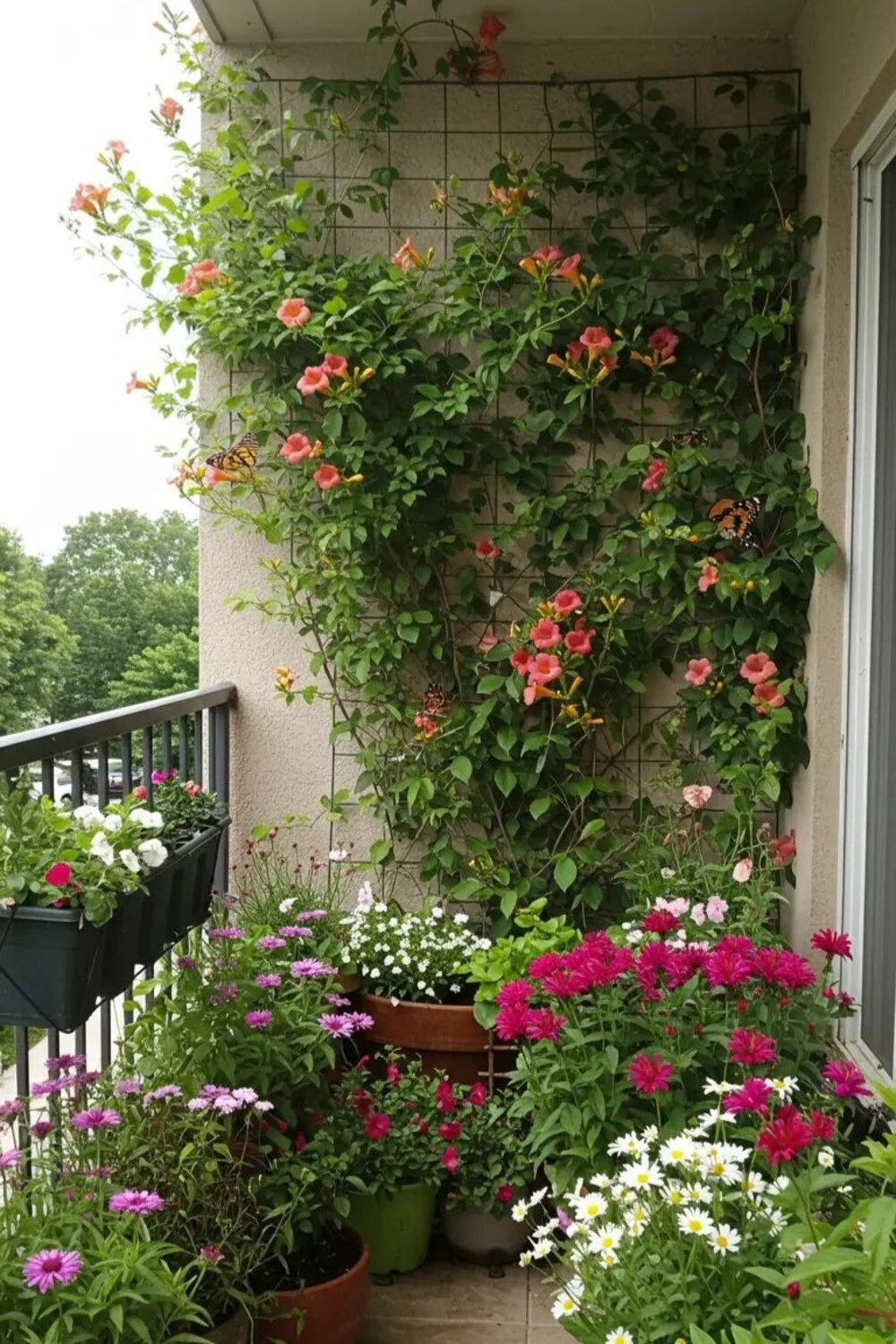
Think about what you’ll enjoy most. Herbs like basil, mint, and parsley are beginner-friendly and useful in the kitchen. Leafy greens such as lettuce and spinach grow well in containers and don’t require deep pots.
If you prefer flowers, start with low-maintenance options like petunias, marigolds, or geraniums. Beginners should avoid plants with complex care needs until they gain experience.
3. Choose the Right Containers
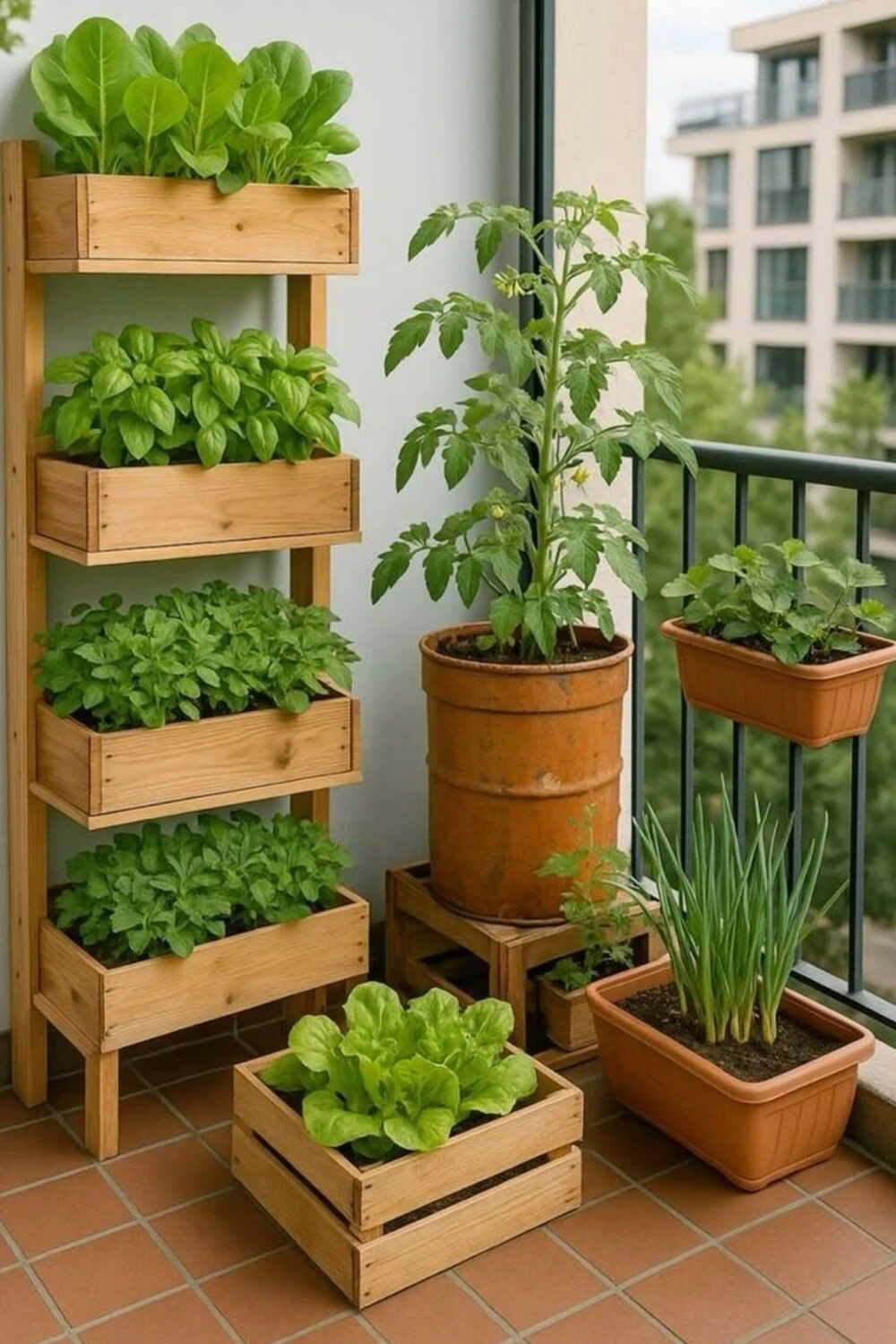
Containers are the foundation of a balcony garden. Choose pots with drainage holes to prevent water from pooling and causing root rot. Railing planters, hanging baskets, and tall pots help save floor space.
Match container size to the plant. Larger plants need deeper pots, while herbs and greens do fine in smaller ones. Lightweight materials like plastic or resin are easier to manage on balconies.
4. Use the Best Soil for Containers
Regular garden soil is too dense for containers. Instead, use a high-quality potting mix designed for container gardening. These mixes drain well while retaining enough moisture for healthy roots.
You can also look for potting soil labeled for vegetables or flowers, depending on what you’re growing. Good soil makes a big difference in plant health and growth.
5. Plan Your Balcony Garden Layout
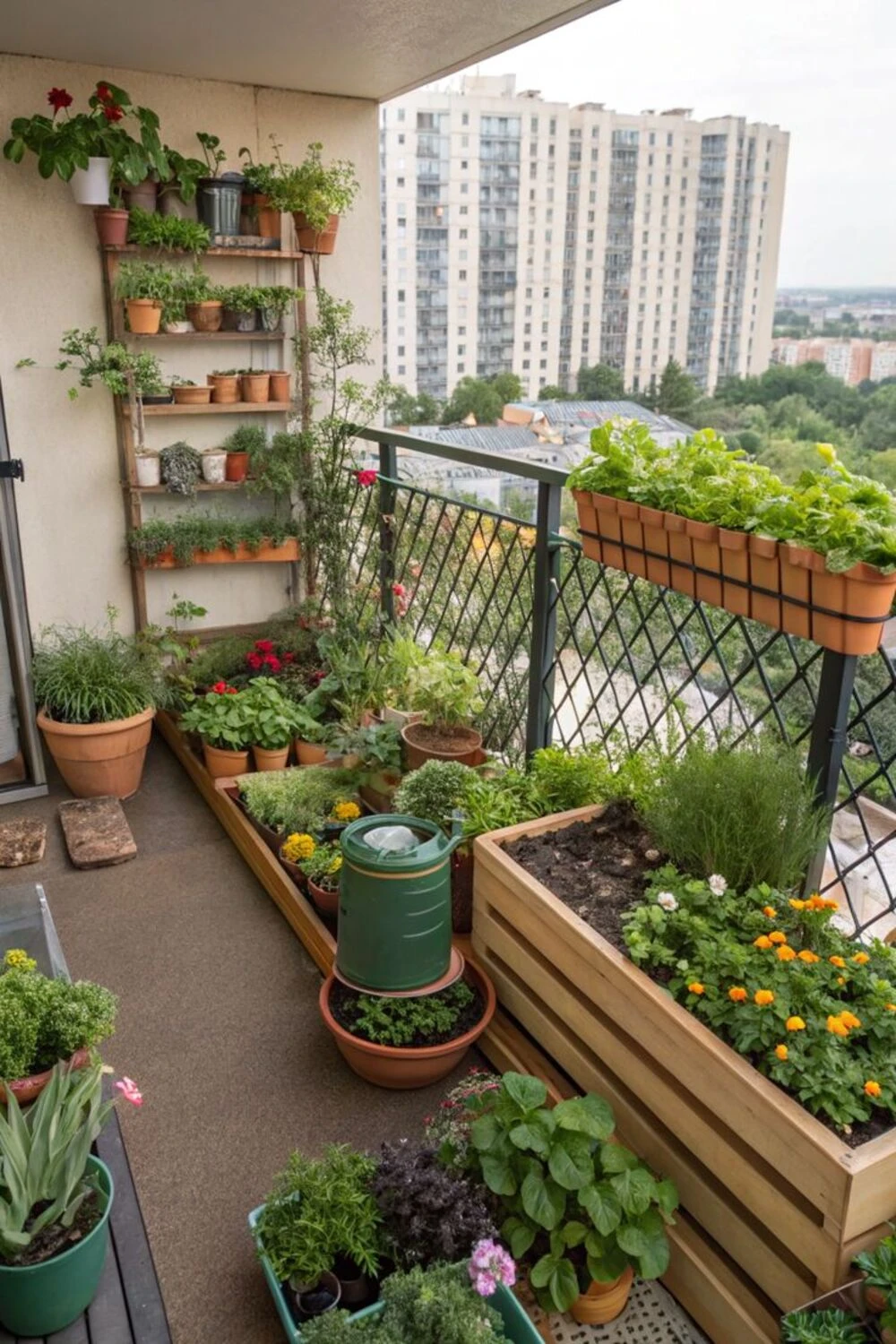
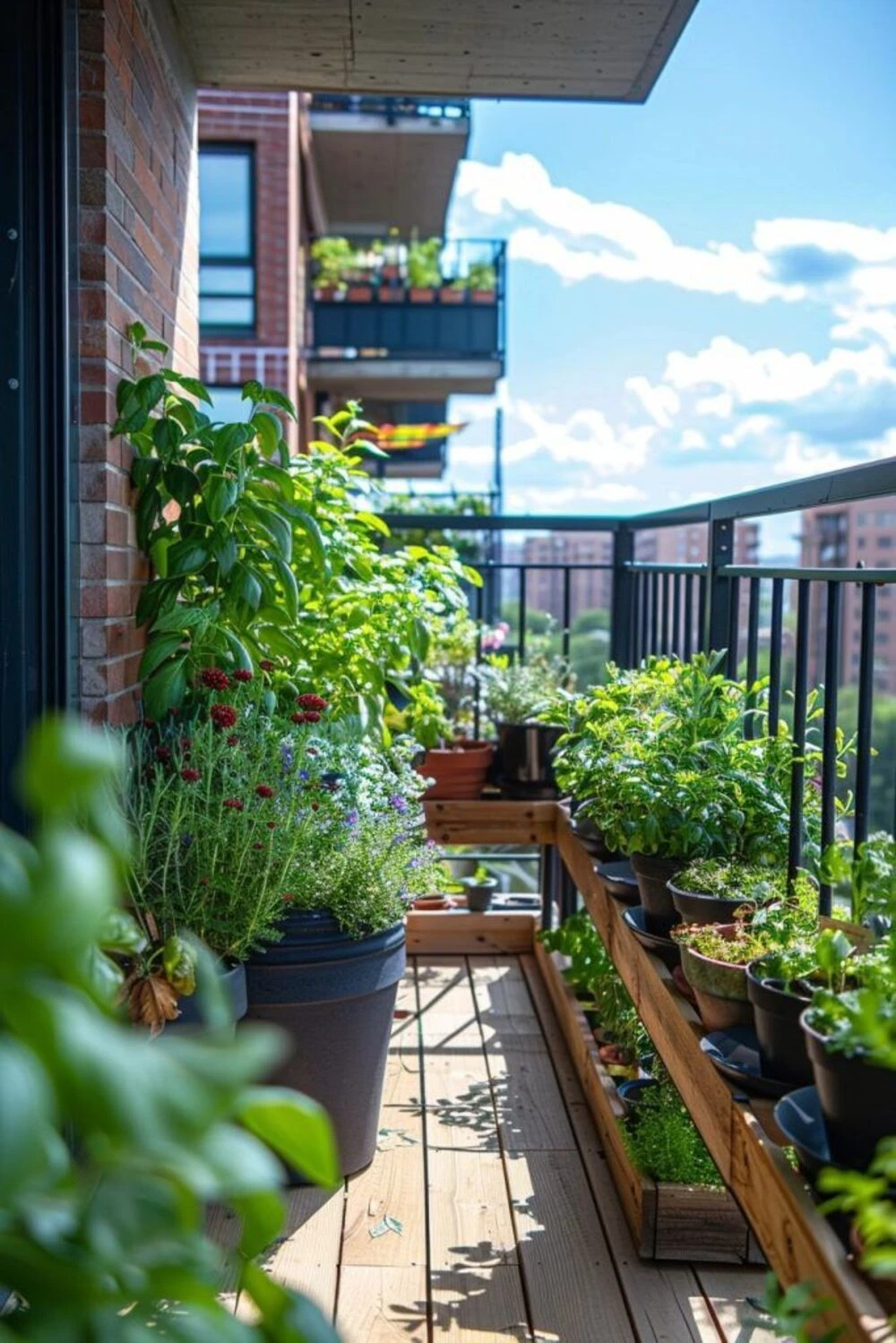
A smart layout keeps your balcony functional and visually appealing. Place taller plants along walls or corners and shorter ones near the front. Group plants with similar sunlight and watering needs together.
Vertical gardening is especially helpful for small balconies. Use wall-mounted planters, shelves, or trellises to maximize growing space without crowding the floor.
How to Water Your Balcony Garden Properly
Container plants dry out faster than garden beds, so regular watering is essential. Check soil moisture by touching the top inch of soil—if it feels dry, it’s time to water.
Water slowly until it drains from the bottom of the pot. Early morning is the best time to water, as it helps plants handle heat during the day.
Plant Fertilization and Maintenance Tips
Because nutrients wash out of containers over time, balcony plants benefit from occasional feeding. Use a balanced, beginner-friendly liquid fertilizer every few weeks during the growing season.
Trim dead leaves, pinch back herbs to encourage growth, and check plants regularly for signs of stress. Simple care goes a long way.
How to Deal with Pests and Weather
Balcony gardens can still attract pests like aphids or spider mites. Inspect plants weekly and rinse leaves with water if you spot issues. Natural solutions like neem oil work well for beginners.
Protect plants from extreme weather by moving pots closer to walls during wind or using shade cloth during intense heat. In colder months, bring sensitive plants indoors.
Mistakes Beginners Should Avoid
Avoid overcrowding plants, which limits airflow and growth. Don’t ignore sunlight needs—placing shade-loving plants in full sun can cause damage. Most importantly, always use containers with drainage holes.
Starting small helps you learn what works best on your balcony before expanding your garden.
Final Thoughts
Starting a balcony garden doesn’t have to be complicated. With the right containers, plants, and basic care, even beginners can grow a beautiful and productive garden in a small space.
Take it step by step, enjoy the process, and let your balcony garden grow with you.
Looking for more balcony inspiration? You might also love: